A lunar eclipse occurs when the Sun, Earth, and Moon line up so that the Moon passes through Earth's shadow. Earth must be between the Sun and Moon, which means lunar eclipses happen near the full Moon phase. They do not happen at every full Moon because the lunar orbit is tilted relative to Earth's orbital plane.
The type of eclipse depends on which part of the shadow the Moon enters. A total lunar eclipse carries the whole lunar disk into the darkest central shadow. Partial and penumbral eclipses involve less complete passages through different regions of that shadow.
Why a full Moon is necessary but not sufficient
At full Moon, the Moon is on the opposite side of Earth from the Sun in the broad orbital geometry. But “opposite side” does not guarantee a perfectly straight three-object alignment. Usually the Moon passes slightly above or below the shadow because of its inclined orbital path.
The lunar orbit crosses Earth's orbital plane at two locations called nodes. An eclipse becomes possible when a full Moon occurs sufficiently close to one of those crossings. The changing positions of the Sun and orbital nodes create seasons when eclipses are more likely.
This geometry also explains why a lunar eclipse is different from an ordinary phase change. The phases result from seeing different portions of the Moon's sunlit half. They are not normally caused by Earth's shadow sliding across the surface each month.
NASA's Moon eclipse overview describes the role of alignment and orbital tilt. The diagrams on this page deliberately enlarge the objects and separate shadow regions for clarity; their sizes and distances are not drawn to one scale.
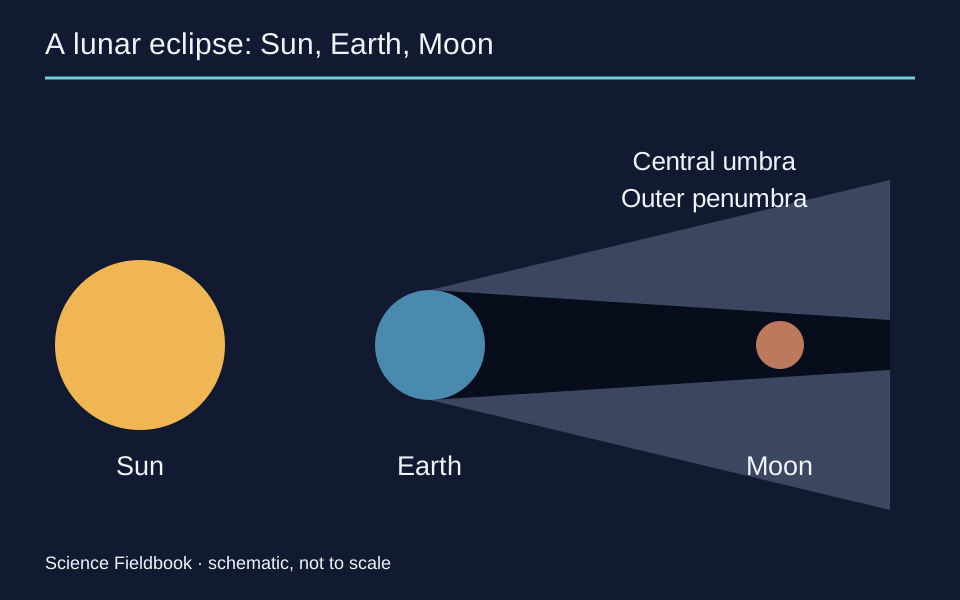
Umbra and penumbra: two different shadow regions
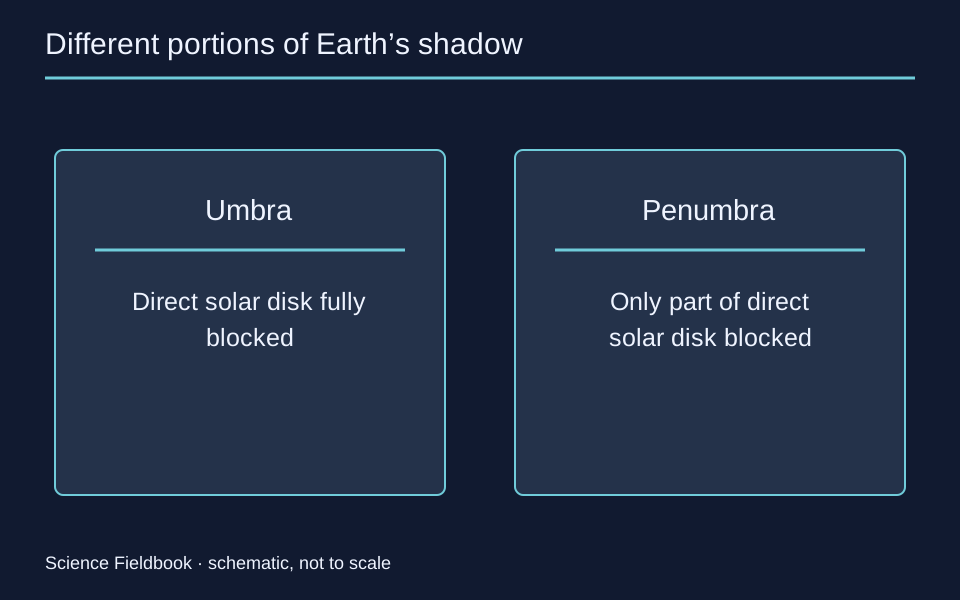
The Sun is an extended disk rather than a point source. From some positions behind Earth, the planet blocks the entire solar disk. That region is the umbra, the darkest central part of the shadow.
From nearby positions, Earth blocks only part of the solar disk. That produces the penumbra, a surrounding region of partial shadow. An observer on the Moon in the penumbra would still see part of the Sun; an observer in the umbra would have the direct solar disk blocked.
These definitions concern the availability of direct sunlight, not a solid dark substance floating behind Earth. The boundaries emerge from the geometry of rays traveling from different parts of the Sun past Earth's edge.
Because the Sun is much larger than Earth, the main umbral shadow narrows with distance. At the Moon's distance, it is still broad enough for the lunar disk to pass completely inside under a suitable alignment. A cartoon with a shadow stretching outward as an ever-widening black tube would misrepresent that geometry.
What makes an eclipse total, partial, or penumbral?
In a total lunar eclipse, the entire Moon enters the umbra. Before and after totality, the Moon passes through partial stages as the dark shadow advances and recedes across its surface. The sequence unfolds over time rather than switching from an ordinary full Moon instantly to a red disk.
In a partial lunar eclipse, only part of the Moon crosses into the umbra. The shaded region can look like a dark curved bite. That bite is Earth's shadow, not a change in the Moon's shape or a piece of the Moon becoming physically smaller.
In a penumbral eclipse, the Moon passes through the penumbra without entering the umbra. The brightness change can be subtle, particularly if the Moon stays near the outer part of the partial shadow. An event can therefore be astronomically real even when a casual observer barely notices it.
Why the shadow edge is curved
Earth is approximately spherical, so the projected edge of its umbral shadow is curved. During a partial phase, that curve crosses the Moon's disk. It is one observable consequence of the three-dimensional shape casting the shadow.
The Moon is not being covered by clouds at its own surface, nor does its normal thin exosphere create a dark weather front. Local cloud above the observer can interfere with the view, but it is separate from the eclipse itself.
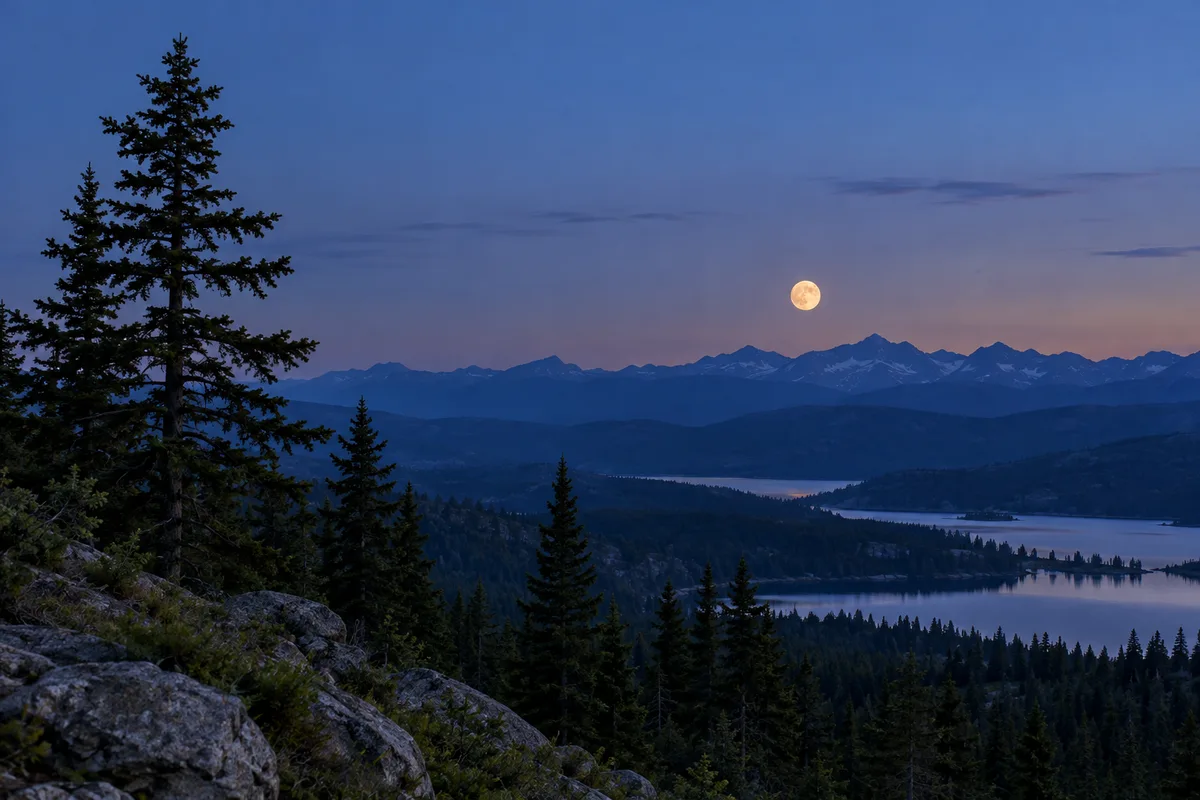
That distinction resembles the Moon illusion near the horizon: the Moon's appearance can be affected by local atmosphere, viewing context, and orbital geometry, and those causes should not be mixed together.
Why a totally eclipsed Moon can turn red
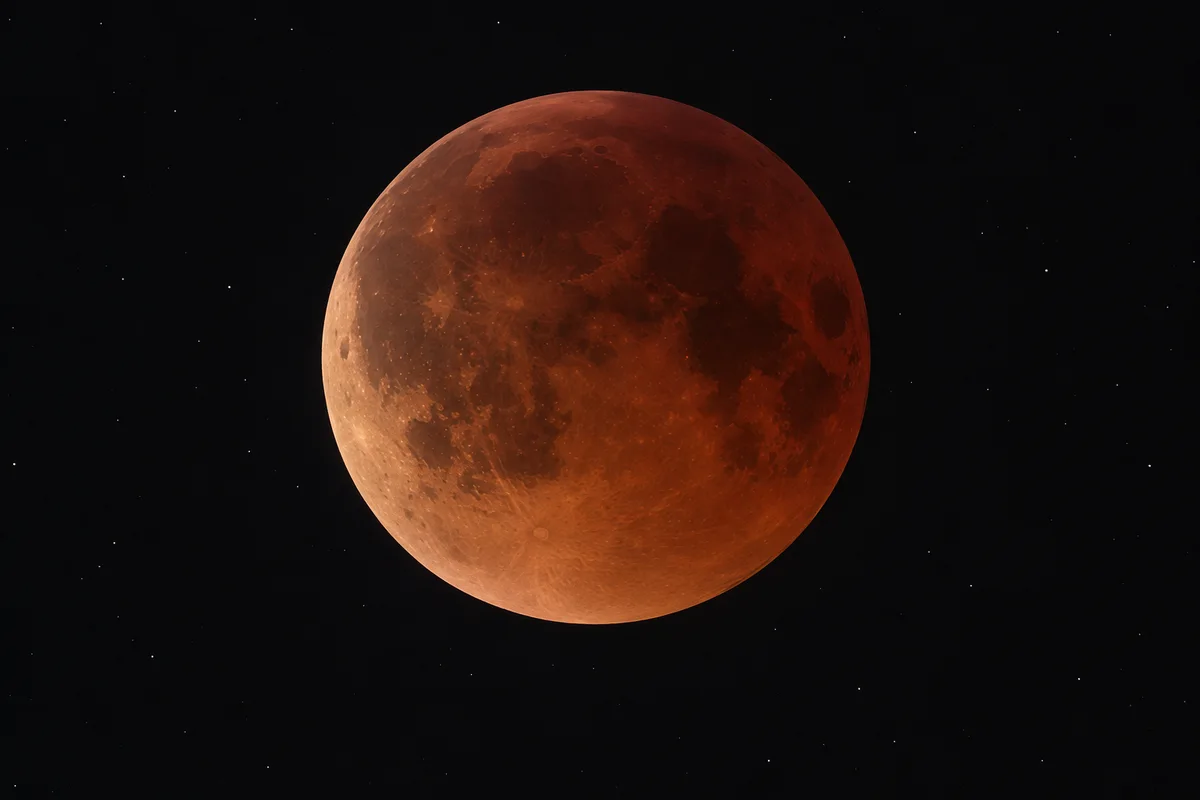
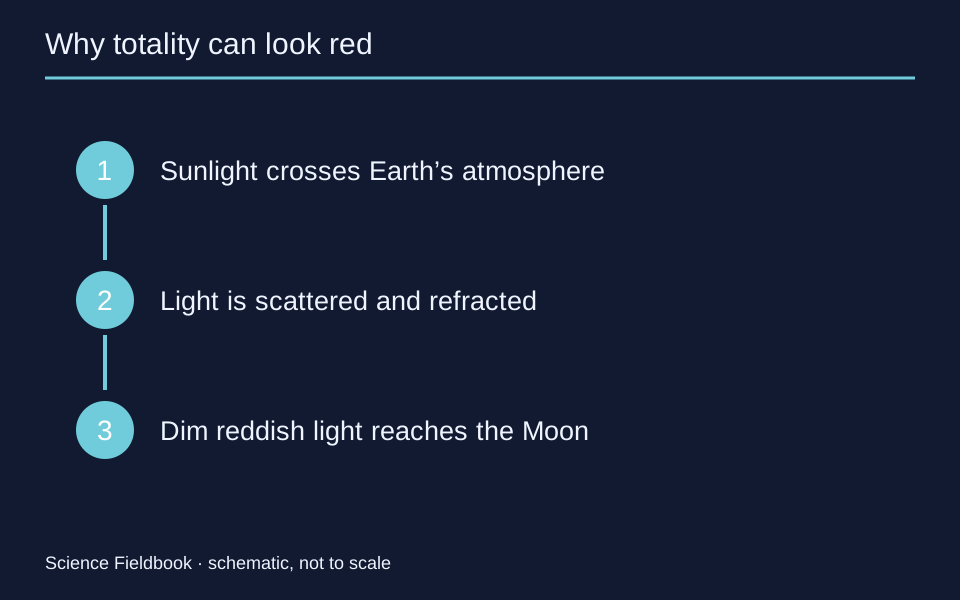
Some sunlight passes through Earth's atmosphere and is bent into the shadowed region. Shorter visible wavelengths are scattered more strongly out of the direct paths, while some longer-wavelength red and orange light survives the atmospheric journey and reaches the Moon.
The Moon reflects a portion of that dim illumination back toward Earth. It is not producing its own red glow, and it has not become hot enough to shine visibly like a heated metal surface. Its altered color is a consequence of the light reaching it.
The color and darkness vary between eclipses because the atmospheric paths encounter different amounts of cloud, aerosols, and other material. A copper-red Moon is common in photographs, but there is no guarantee that every total eclipse will have the same hue or brightness.
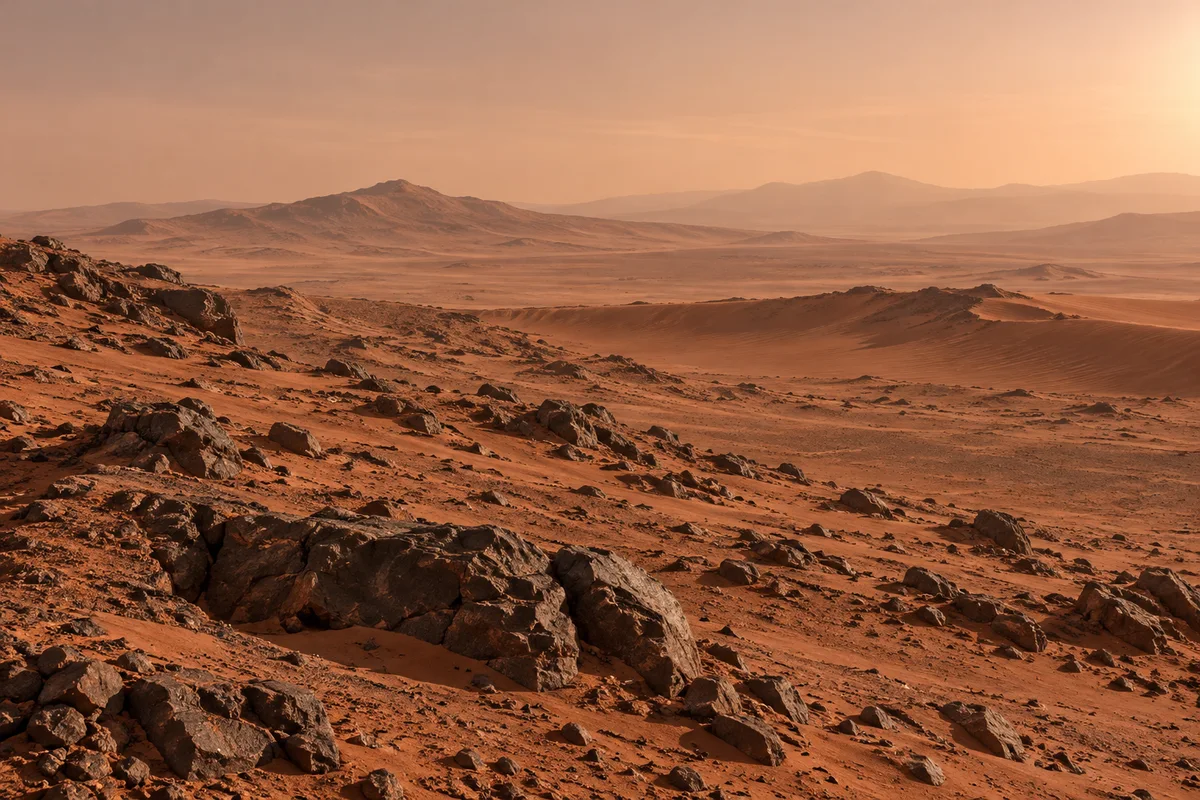
This differs from Mars's red mineral dust. Mars's characteristic color largely concerns the surface materials reflecting sunlight; the eclipsed Moon's color largely concerns sunlight filtered and redirected through another world's atmosphere.
Who can see a lunar eclipse?
A lunar eclipse can be visible from places on Earth's nighttime side where the Moon is above the horizon during the event. Local weather, terrain, and the timing of moonrise or moonset affect how much of the sequence an observer can watch.
People at different locations may therefore see different portions of one event. One observer might watch the full sequence while another sees the Moon rise already eclipsed. The eclipse is not being created separately above each location; they are viewing the same shadow passage from different positions.
Unlike looking at the Sun, looking directly at the Moon during a lunar eclipse does not require solar-viewing filters. That statement applies to the Moon itself. A separate solar eclipse has very different eye-safety requirements and should never be treated as the same observing situation.
Why eclipse photographs look different
During totality, the Moon is much dimmer than at ordinary full Moon. Cameras can compensate with longer exposures or different sensitivity settings. Those choices can reveal color and surface detail that appear fainter to a person's unaided eyes.
Separate frames may be combined into a sequence showing different stages. Such a composite can be informative if its construction and time sequence are explained. It is not a picture of several moons existing simultaneously in the sky.
The illustration on this page is an artist impression, not a record of a specific event. To evaluate an actual eclipse image, look for information about time, location, exposure, and processing rather than assuming its brightness matches a direct visual impression.
Eclipse timing is a geometry problem
Different stages begin when the lunar disk first touches or fully enters a particular shadow boundary. Published predictions distinguish those contacts, so “the eclipse begins” can refer to the first penumbral contact or a later, more visually obvious umbral stage. The difference is a matter of definition, not conflicting observations.
A prediction also needs a time standard. An event listed in UTC must be converted correctly for the observer's location and date, and part of the event may occur before local moonrise. This article deliberately gives no upcoming-event timetable: the enduring mechanism is separate from a schedule that should be checked against a current astronomical source.
The takeaway
A lunar eclipse is a passage of the Moon through Earth's shadow at a suitable full-Moon alignment. Umbra and penumbra determine the type, orbital tilt explains why the event is occasional, and filtered sunlight explains many of the red colors seen during totality.
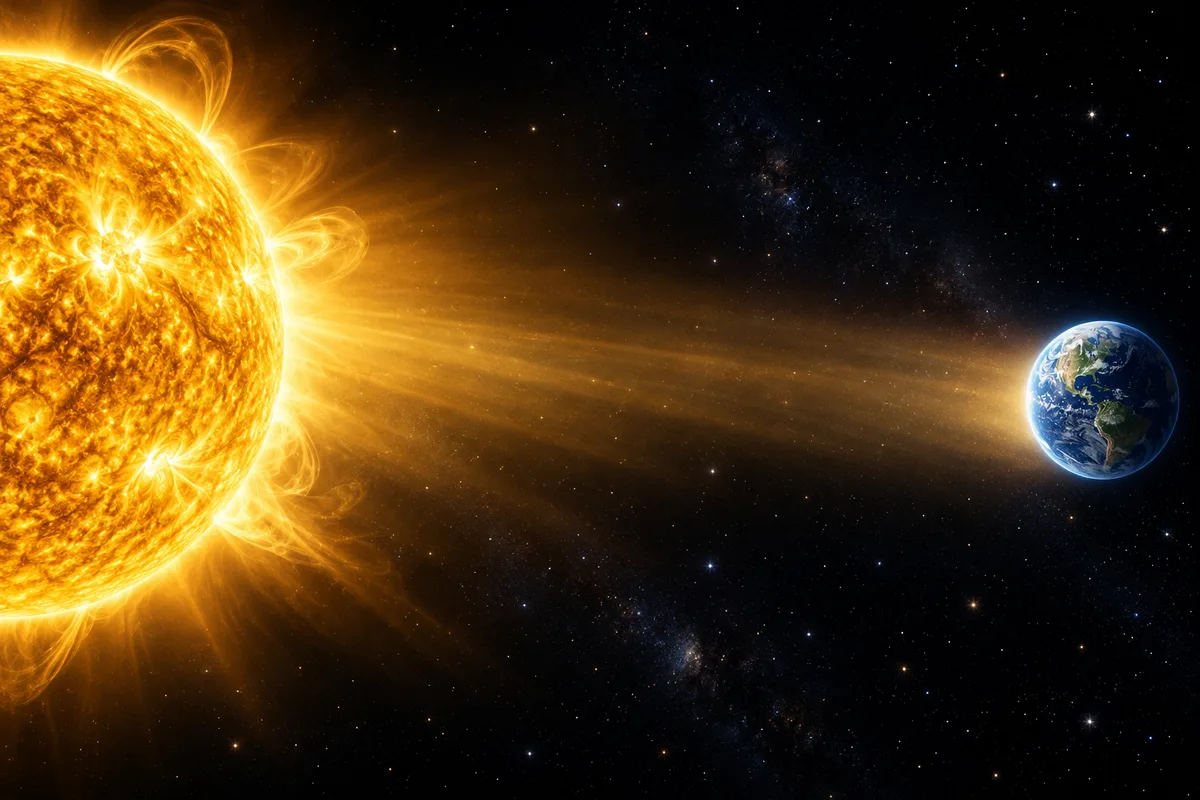
Following the light also connects eclipses to the finite journey of sunlight to Earth. Shadows are geometry, but they become visible because light travels along particular paths and can be blocked, scattered, and refracted.