A heat pump uses external energy, usually electricity, to move thermal energy from one place to another. In heating mode, an air-source system absorbs heat from outdoor air and releases it indoors. In cooling mode, a reversible system moves heat out of the building. The refrigerant cycle makes those transfers possible even when the desired direction is from a colder environment to a warmer one.
The device does not create more energy than it receives from all sources combined. Its special advantage is that much of the delivered heat comes from the environment rather than being produced solely by electrical resistance. Keeping those energy streams separate resolves the apparent efficiency puzzle.
How heat can come from cold outdoor air
Air below room temperature still contains thermal energy. The relevant comparison is between the air and the refrigerant in the outdoor heat exchanger. If that refrigerant is colder than the air, heat can flow from the air into it.
The heat pump then changes the refrigerant's pressure and temperature so that it can release heat at a temperature above that of the indoor air. Electrical work makes this overall transfer possible. Without that work, heat would not spontaneously move through the complete cycle from the colder outdoor environment to the warmer interior.
This distinction is similar to pumping water uphill. The water can flow downhill naturally, while a pump uses work to move it in the opposite overall direction. The analogy concerns energy input; refrigerant behavior also includes phase changes and pressure-dependent temperatures that water in a simple pipe analogy does not capture.
Four main stages of the refrigerant cycle
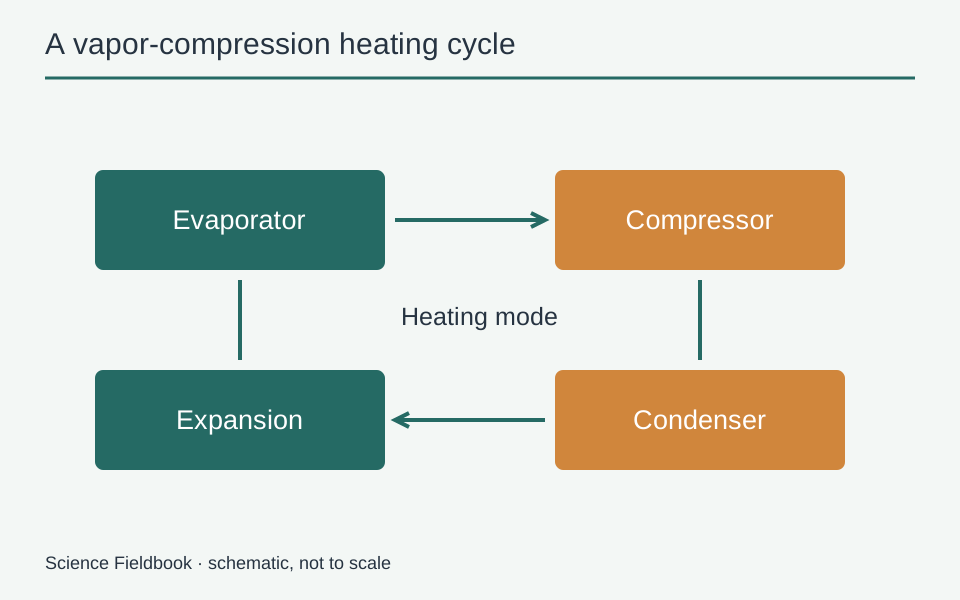
The evaporator is a heat exchanger where low-pressure refrigerant absorbs heat and boils. In heating mode, this role is usually performed by the outdoor coil. Boiling does not require the familiar temperature of a pot of water because a refrigerant has different properties and operates at a chosen pressure.
The compressor takes in vapor and raises its pressure. This work also raises the refrigerant's temperature, allowing it to become hot enough to release heat to the intended warmer environment.
The condenser is the heat exchanger where high-pressure refrigerant releases heat and condenses. In heating mode, the indoor coil performs that role. Air or another distribution medium carries the released heat into the occupied space.
An expansion device reduces the refrigerant's pressure before it returns to the evaporator. The resulting low-pressure mixture can absorb heat again. These stages form a cycle rather than four separate consumable ingredients.
The words “evaporator” and “condenser” describe roles
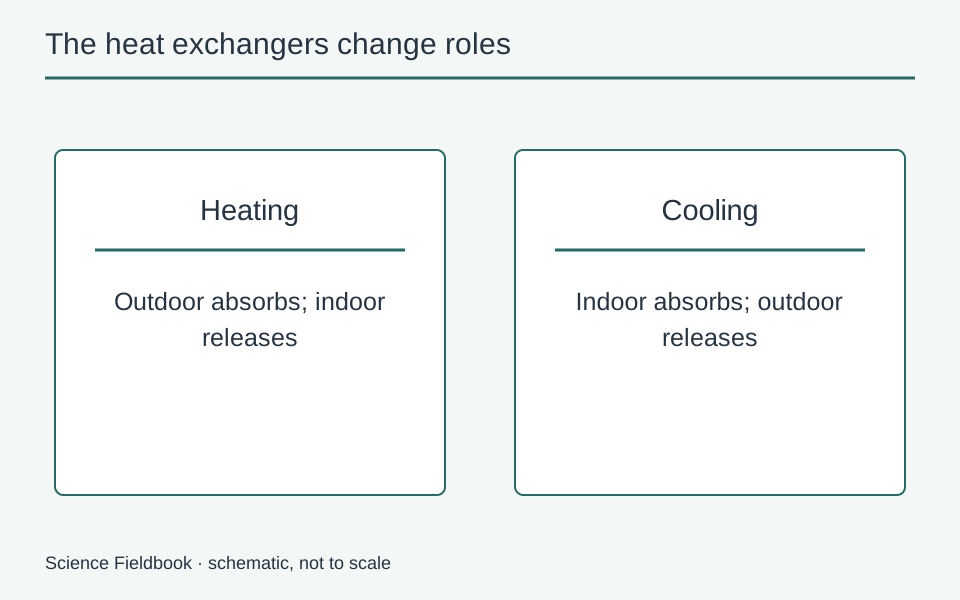
In a reversible heat pump, a coil can serve as an evaporator in one mode and a condenser in the other. Its location does not permanently determine its role. That is why a label such as “the outdoor condenser” can become misleading when discussing heating operation.
The DOE heat-pump guide describes heat transfer between indoor and outdoor spaces, while a DOE technical guide illustrates reversible arrangements and component functions.
A simplified diagram shows the main sequence. Actual equipment includes sensors, controls, valves, fans, and protective functions that support the cycle. The diagram is not a refrigerant-service or installation schematic.
How the same system can cool a home
In cooling mode, the indoor coil absorbs heat and the outdoor coil rejects it. A reversing valve and associated piping and controls change the refrigerant's path so the coils exchange roles. The compressor still performs its intended vapor-compression job; it is not simply spun backward to reverse the entire process.
Cooling removes energy from indoor air rather than manufacturing cold as a substance. Heat released outdoors includes both the energy taken from indoors and the work supplied to the equipment, subject to the chosen system boundary and other small energy paths.
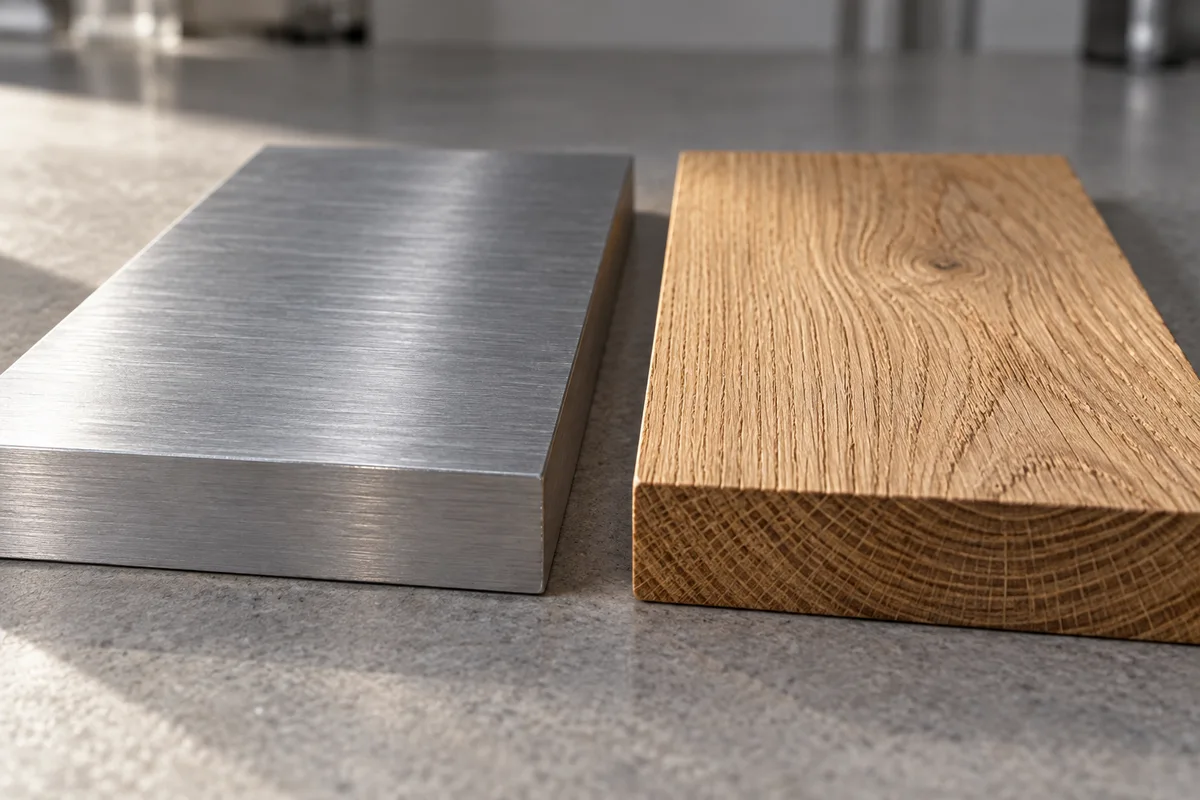
That energy accounting is closely related to why metal feels colder than wood. Both explanations become clearer when heat is treated as energy in transit instead of imagining cold flowing into a warmer object.
Why delivered heat can exceed electrical input
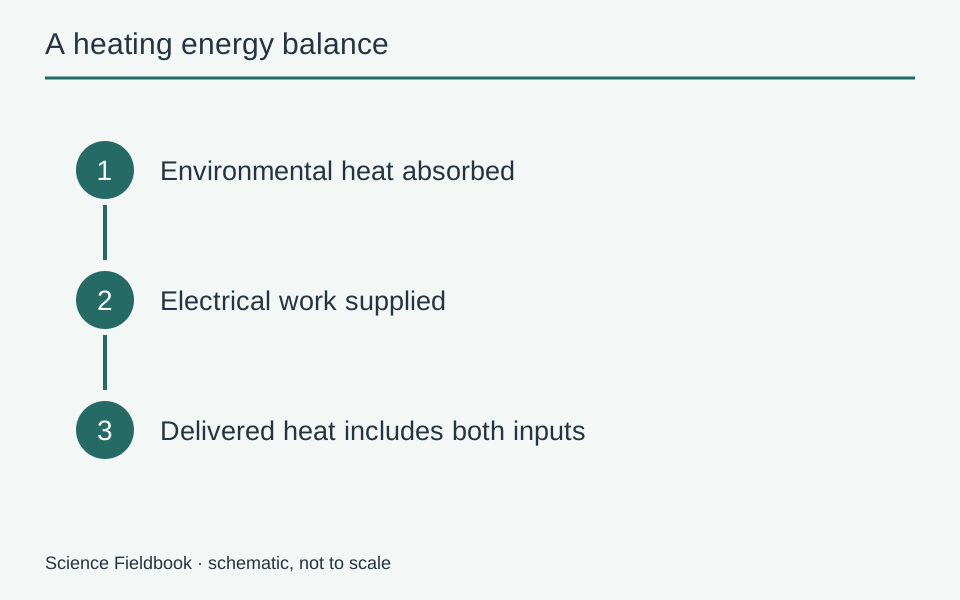
In heating mode, a simplified energy balance is delivered heat equals absorbed environmental heat plus input work. If one unit of electrical energy helps move two units of heat from outdoors, the indoor side can receive approximately three units of heat under that illustrative boundary.
The coefficient of performance, or COP, compares useful heat delivered with the relevant input work. A COP of three in a worked example does not mean energy was created or that every heat pump always achieves that value. It describes the relationship under specified operating conditions.
For comparison, electrical resistance heating primarily converts its electrical input into heat at the point of use. A heat pump can deliver more heat per unit of electrical input because it also draws on an environmental source. The comparison must still account for the full equipment and operating conditions.
Conditions change the performance
As the required temperature lift grows, moving heat becomes more demanding. Outdoor temperature, indoor delivery temperature, humidity, airflow, equipment design, and cycling behavior can all influence performance and capacity.
A seasonal rating summarizes operation under a defined method; it is not the COP at every hour of a winter. A momentary laboratory rating is likewise not a guarantee for an incorrectly sized or poorly installed system in a different building.
The DOE explanation of air-source systems provides useful component context, but selecting equipment or predicting bills requires local building and climate information not supplied by this article.
Frost, defrost, and backup heat
During heating, an outdoor coil can become cold enough for moisture to freeze on it under suitable conditions. Frost can restrict airflow and heat exchange. Systems use controlled defrost strategies to restore performance.
Defrost changes the short-term energy flow and can reduce net heating during the process. It is not evidence that a heat pump has stopped obeying the cycle described earlier. It is an operational response to an environmental condition at the heat exchanger.
Some installations also use supplementary heat when needed. Whether and when that occurs depends on equipment capacity, controls, building demand, and weather. It would be misleading to promise that every heat pump can meet every building's heating demand without any additional source.
The underlying freezing behavior connects to ice formation, but a floating ice cube and frost on a metal coil have different geometries and heat-transfer conditions. Shared water chemistry does not make them the same engineering problem.
Air-source, ground-source, and other systems
Air-source heat pumps exchange heat with outdoor air. Ground-source systems use a ground-connected heat-exchange arrangement as their source and sink. Water-source systems use other suitable water-related heat reservoirs. The broad cycle can be similar while the external heat-transfer conditions differ.
Distribution also varies. Some systems deliver warmed or cooled air through ducts or indoor units; others transfer heat into water for appropriate building systems. The desired delivery temperature affects the required lift and therefore the operating conditions.
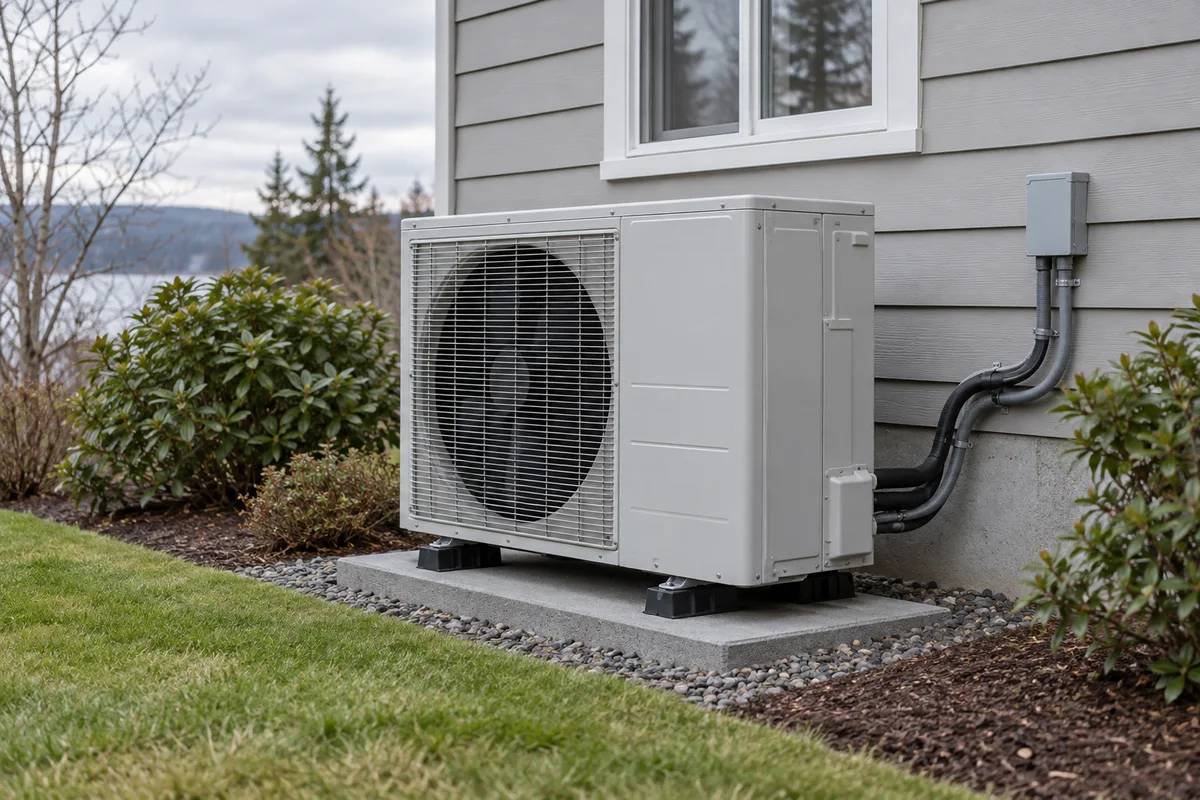
These distinctions explain why “heat pump” is a family of systems rather than one standard outdoor box. A photograph can identify a familiar form, but the source, refrigerant circuit, distribution, and controls determine how the installation actually works.
What a heat pump is not
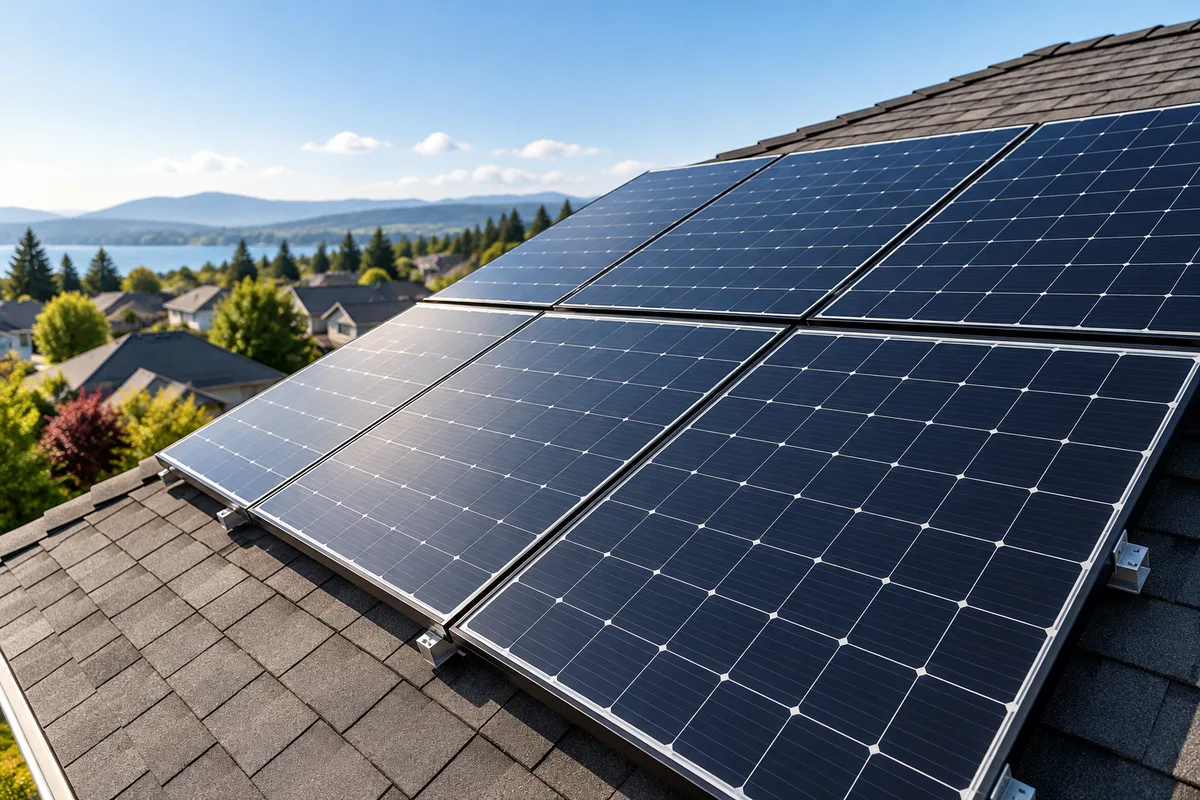
A heat pump is not the same conversion mechanism as a solar photovoltaic panel, which turns absorbed light into electrical output. Solar electricity can supply a heat pump, but the two devices perform separate stages in an energy chain.
Nor is it automatically a home-improvement recommendation for every building. Costs, electrical supply, installation, refrigerant handling, climate, and occupant needs require an appropriate assessment. This article provides mechanism-level education rather than sizing, wiring, or servicing instructions.
Similar thermal-management principles appear in some electric vehicles, where battery and cabin needs add further constraints. The physical cycle is transferable, while the practical design is application-specific.
The refrigerant and the air do not need to mix
Heat exchangers let energy pass between the refrigerant circuit and air or another fluid while keeping the substances in their intended separate paths. The refrigerant can boil or condense inside tubing as air moves over the outside heat-transfer surface.
This matters because a diagram's arrows can otherwise suggest that outdoor air is pumped through the refrigerant pipes into the house. In a typical split air-source system, refrigerant moves between the indoor and outdoor equipment while separate fans move air across each coil. Ventilation is a different building-system function, even when it operates alongside the heat pump.
The takeaway
A heat pump uses work to control a refrigerant cycle and transfer heat in a useful direction. Evaporation absorbs energy, compression raises the conditions for heat release, condensation delivers it, and expansion prepares the refrigerant for another cycle. Its apparent energy advantage comes from moving environmental heat, with real performance determined by the full temperature lift and system conditions.