Many large caves form when slightly acidic water moves through soluble rock, gradually dissolving material and widening cracks into passages. Limestone is especially important because its main mineral, calcite, reacts with naturally acidic water. Given the right rock, water routes, and enough time, a network of small openings can become an underground cave system.
That is the explanation for a solution cave, not for every cave on Earth. Lava tubes, sea caves, and glacier caves develop through different processes. Even within limestone, the water's chemistry and the landscape's history can produce very different underground shapes.
Why ordinary water can dissolve limestone
Rainwater absorbs some carbon dioxide from the atmosphere. Water passing through soil often encounters more carbon dioxide from biological activity. Dissolved carbon dioxide reacts with water to form a weak carbonic acid system.
Limestone contains calcium carbonate, commonly in the mineral calcite. Carbon dioxide-bearing water can convert some of that solid material into dissolved calcium and bicarbonate ions. The rock does not need to melt, and the water does not need to be a strong industrial acid.
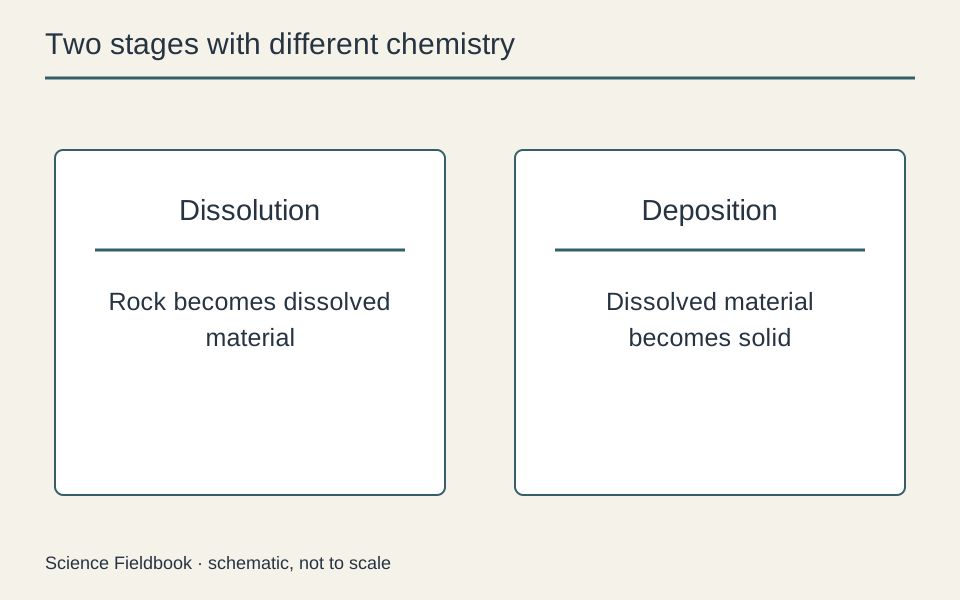
A simplified reaction is calcium carbonate plus carbon dioxide plus water producing dissolved calcium and bicarbonate. The reaction can proceed in either direction as conditions change, which helps explain why water can dissolve rock in one location and deposit mineral material in another.
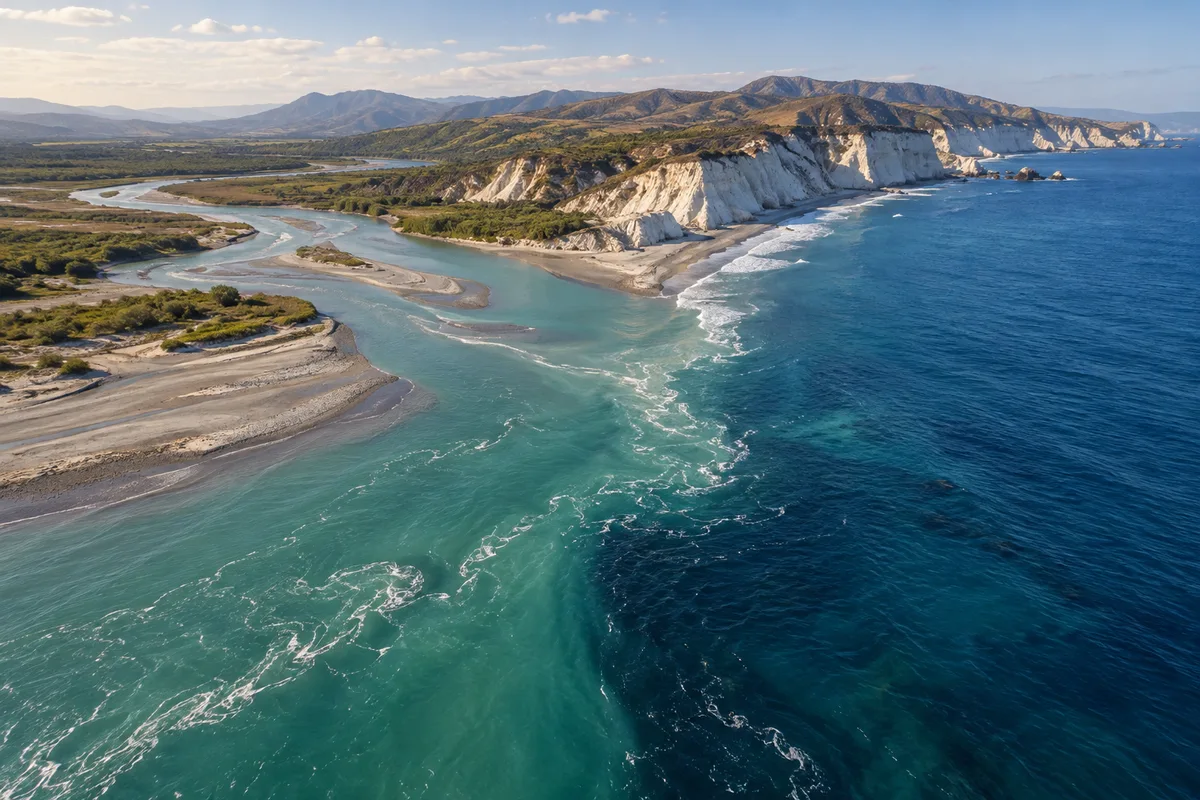
Chemical weathering here shares a broader theme with the dissolved material carried to the ocean. A rock surface can lose material into transparent water without producing a visible pile of sediment directly below it.
Cracks give the water a starting route
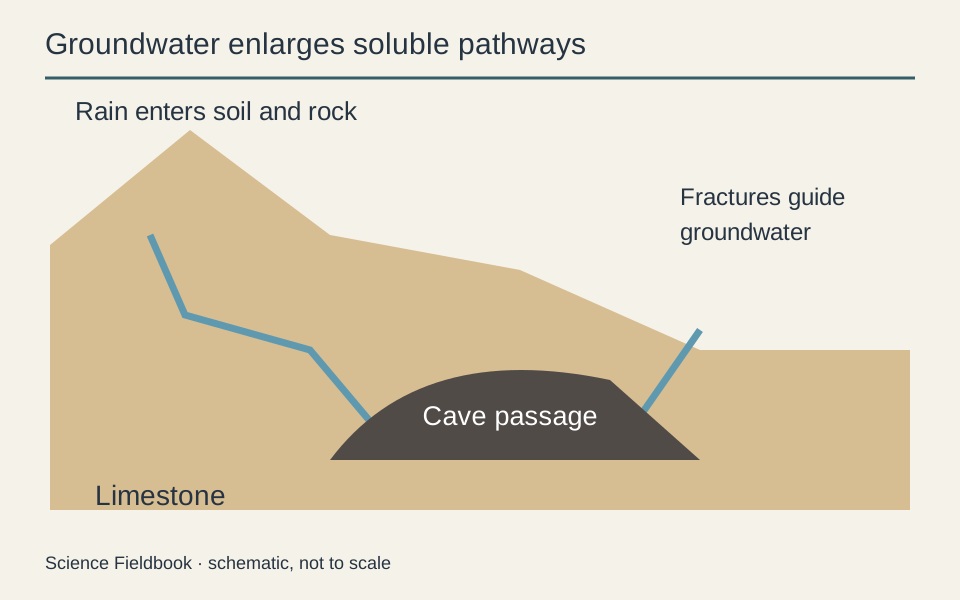
Rock is not always a perfectly sealed block. Joints, fractures, and boundaries between layers provide routes through which water can move. Water flowing through a suitable opening exposes more mineral surface to reaction and carries dissolved products away.
As a passage enlarges, it may carry more flow, which can further favor enlargement. Other pathways may receive less water and grow more slowly. This feedback helps create a connected drainage system rather than a uniformly dissolved layer of rock.
The shape of a cave therefore reflects rock structure as well as water chemistry. A long narrow passage may follow a fracture. A flatter passage may exploit a bedding plane. Harder or less soluble layers can redirect flow or form protective caps above more soluble material.
Water also carries sediment. Sand and gravel can abrade surfaces, and sediment deposits can partly fill old passages. Dissolution is central in limestone caves, but physical erosion and deposition can modify the resulting system.
Underground rivers and changing water levels
Some passages form when they are filled with groundwater. Water can dissolve rock around much of the passage's perimeter, producing shapes different from a stream channel that has air above it. Other passages develop primarily along a stream flowing on the cave floor.
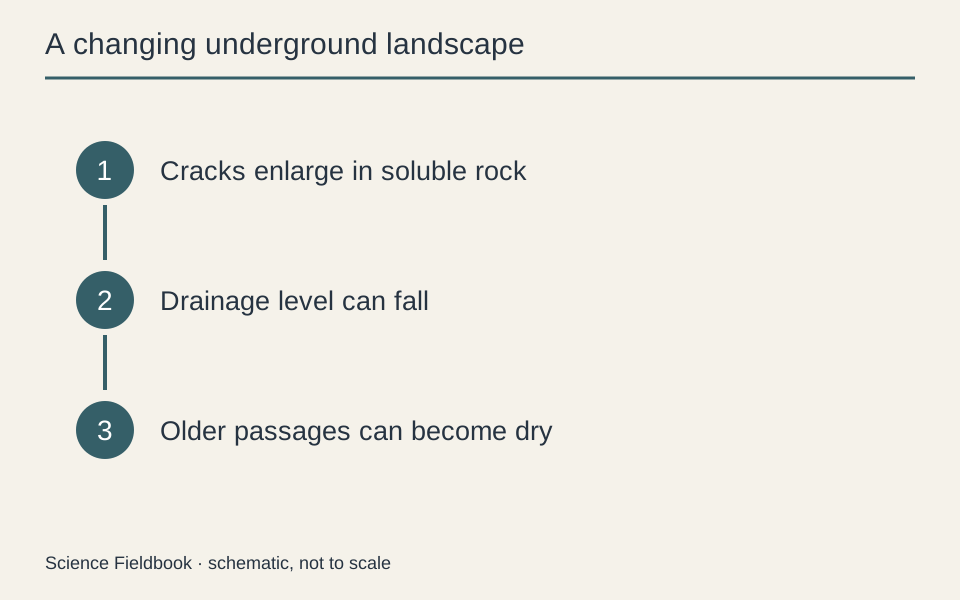
The boundary between saturated and unsaturated ground changes over time. A river cutting lower into a valley can lower the drainage level of a cave system. Older high passages may become dry while active water routes form farther below.
This helps explain caves with multiple levels. They are records of a landscape's changing drainage rather than evidence that the entire cave was hollowed out at one instant. A present-day trickle may be only the latest phase of a much longer water history.
The USGS account of Mammoth Cave geology describes the interaction of soluble limestone, less soluble caprock, and regional drainage. It is a useful real example, but its particular timetable should not be generalized to every cave.
Why stalactites hang and stalagmites rise
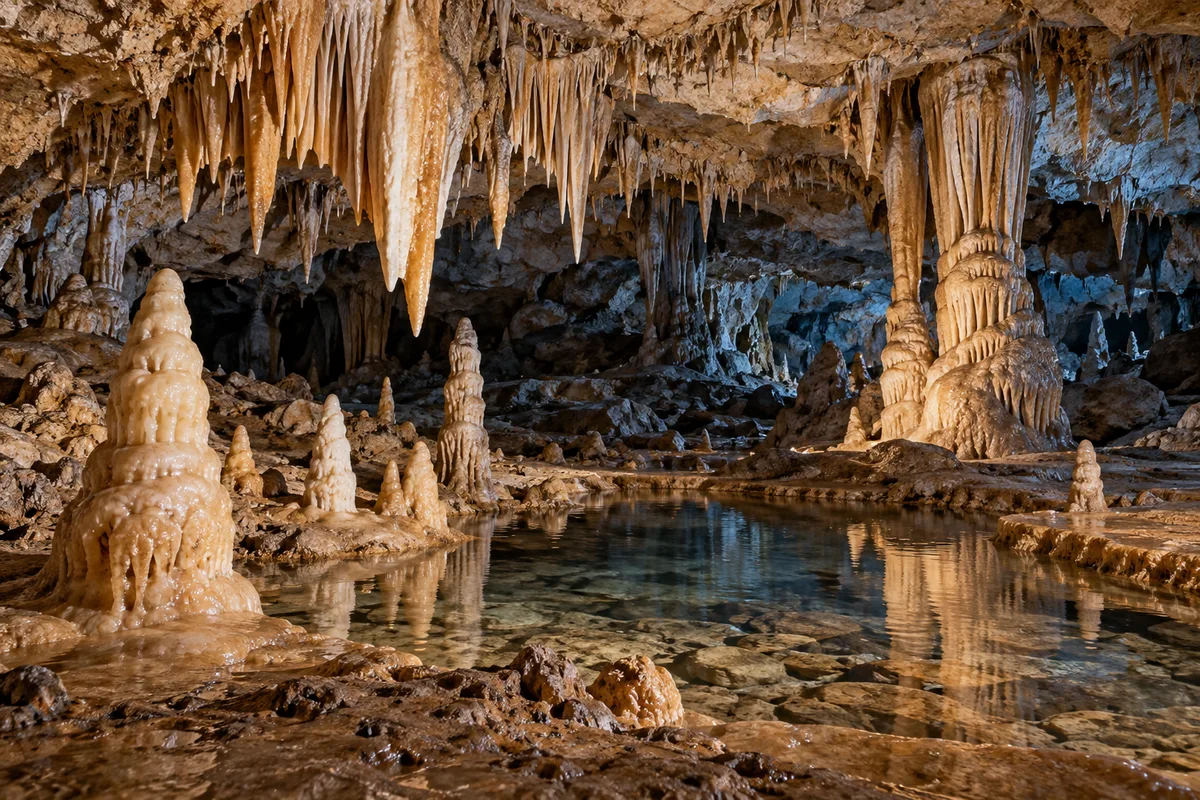
After a cave has an air-filled space, mineral-bearing water can drip from the ceiling. If conditions favor loss of carbon dioxide from that water, some dissolved calcium carbonate can precipitate as solid calcite. Repeated deposition builds cave formations called speleothems.
A stalactite hangs from a ceiling. A stalagmite grows from a floor, often where droplets fall and leave mineral behind. If they eventually meet, they can form a column. Thin sheets and flowing water can also produce curtains and flowstone rather than pointed structures.
These deposits are not the cave being “dug” in reverse at a matching rate. Dissolution and deposition occur under different local conditions. A cave can contain active deposition in one place and active dissolution elsewhere.
Growth rates vary widely with water supply, dissolved mineral content, carbon dioxide conditions, and other environmental factors. Counting the size of a stalactite is not a reliable way to calculate a cave's age without additional evidence and a suitable scientific method.
Why touching formations matters
Speleothems can be fragile, and cave environments can be sensitive to disturbance. Following a cave's visitor rules protects both the formations and the living organisms that share the environment. The scientific interest lies in leaving those records intact, not in testing them by touching or breaking them.
The photos and diagrams here are explanatory illustrations, not navigation aids. Natural caves can contain unstable ground, flooding hazards, and difficult routes. A general article about cave formation does not establish that entering an unmaintained cave is safe.
Caves that do not begin with limestone dissolution
A lava tube can form when the outside of a lava flow cools while molten lava continues moving beneath the crust. If that molten material drains away, it can leave an open tunnel. Its origin is primarily volcanic flow and cooling rather than carbonic acid dissolving carbonate rock.
A sea cave can develop where waves exploit weaknesses in a coastal cliff. Erosion and repeated wave action enlarge openings, though chemical processes can also contribute depending on the rock. The energy source and setting differ from a typical inland groundwater passage.
Glacier caves form within ice through processes involving meltwater and heat. They can change rapidly compared with many rock caves. Calling all these openings caves describes their form, not one universal way they were produced.
Even solution caves have variations. Other soluble rocks include gypsum and rock salt, and some cave systems involve acids produced through different geochemical pathways. Limestone and carbonic acid provide a major example, not the complete list.
A cave is part of a surface landscape
Rainfall, vegetation, soil, and river levels above a cave affect what happens below. In a karst landscape, water can enter through cracks and sinkholes and reappear at springs. Underground routes may connect places that do not appear connected at the surface.
This connection can make groundwater vulnerable to contamination entering quickly through openings. A cave is therefore not an isolated empty room under the ground; it is part of a water system with inputs, pathways, and outlets.
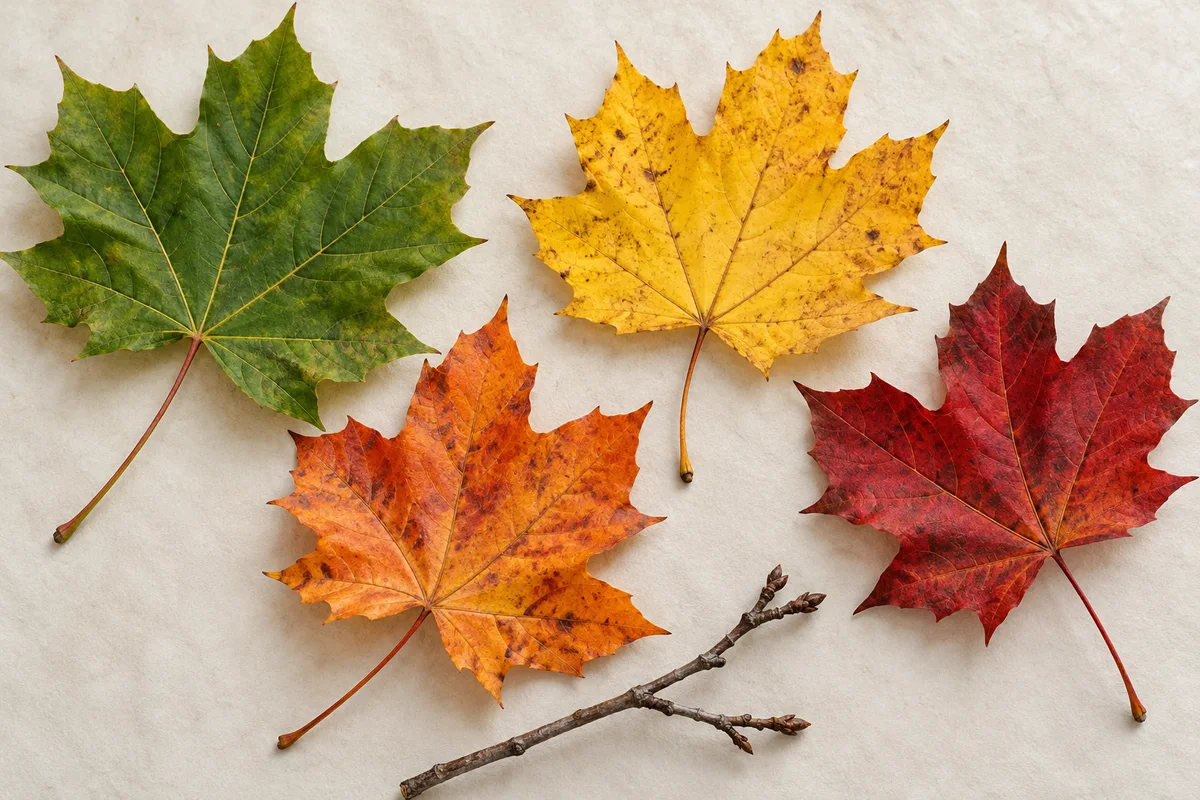
Seasonal changes that alter soil activity or rainfall can affect water chemistry as well as water quantity. The relationship is different from seasonal changes in leaf pigments, but both show why a landscape's biology and physical environment cannot always be separated neatly.
How cave records are investigated
Geologists combine passage shape, sediment layers, mineral chemistry, surface drainage, and dating methods to reconstruct a cave's history. No single stalagmite or rounded tunnel supplies the entire timeline. A deposit can be younger than the passage containing it, while sediment can be moved into an older void.
The order of events is often as important as an absolute age: first a passage enlarged below a water table, later drainage fell, and later still mineral deposits grew in air-filled space. Different evidence supports each step. Separating those events avoids treating a cave's present appearance as a snapshot of one original formation episode.
The takeaway
Limestone caves usually begin with water moving through weaknesses and dissolving soluble rock. Changing drainage shapes the passages, while later mineral deposition creates many familiar formations. Other caves have volcanic, coastal, or glacial origins. Asking what the rock is and where the water or energy came from is more useful than assuming every underground opening has the same history.
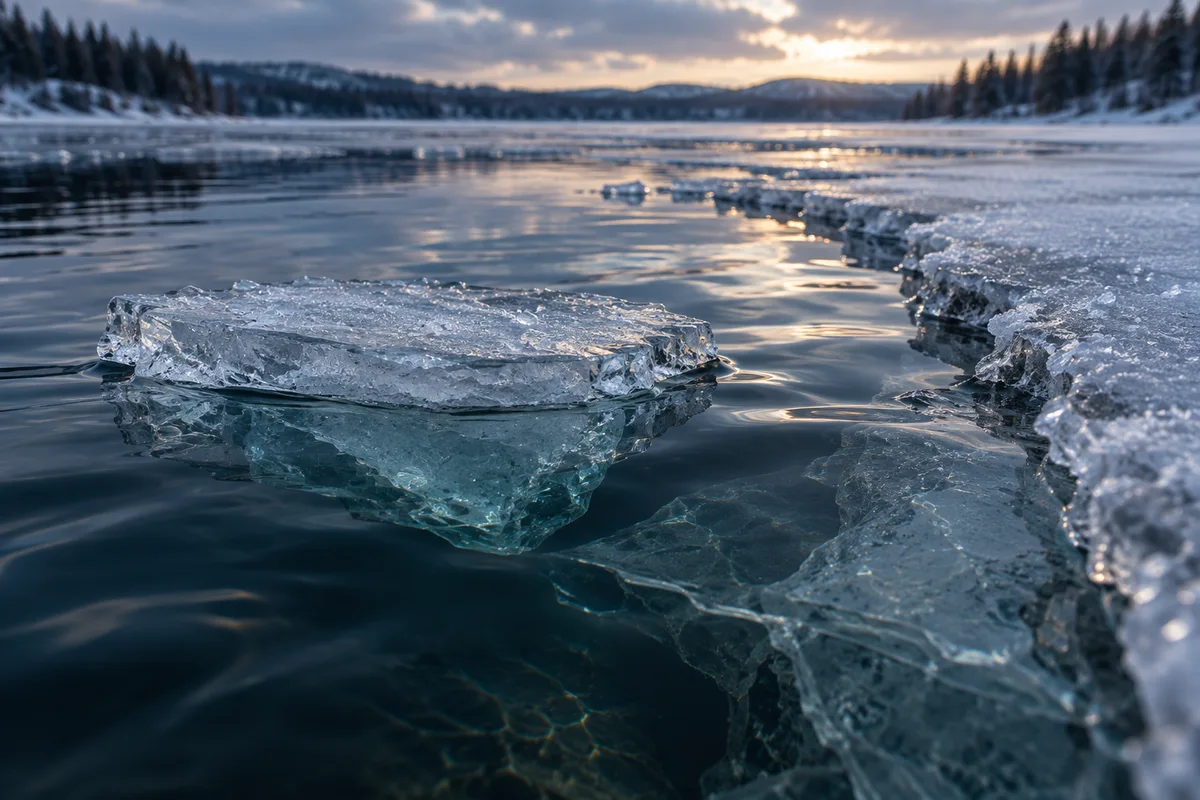
For related water behavior, explore how freezing changes water's density. Water can reshape landscapes by changing phase, moving sediment, and reacting chemically—different mechanisms with very different timescales.