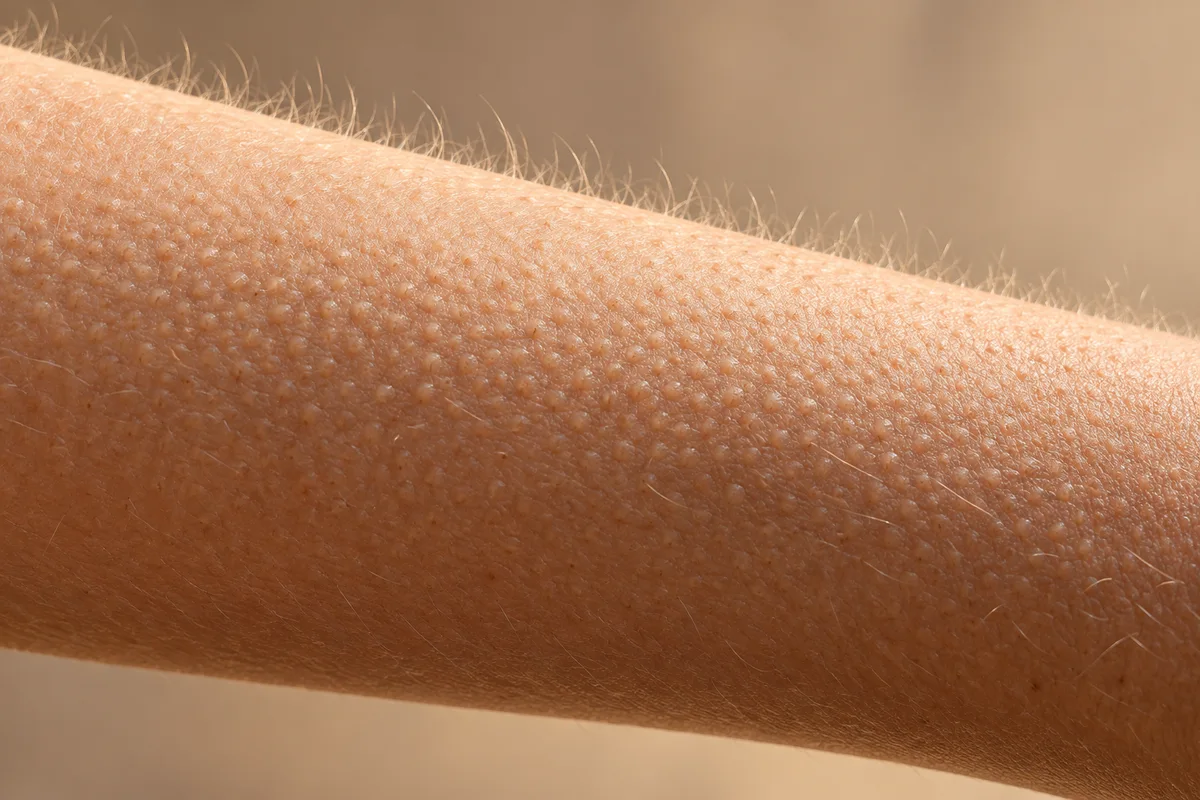
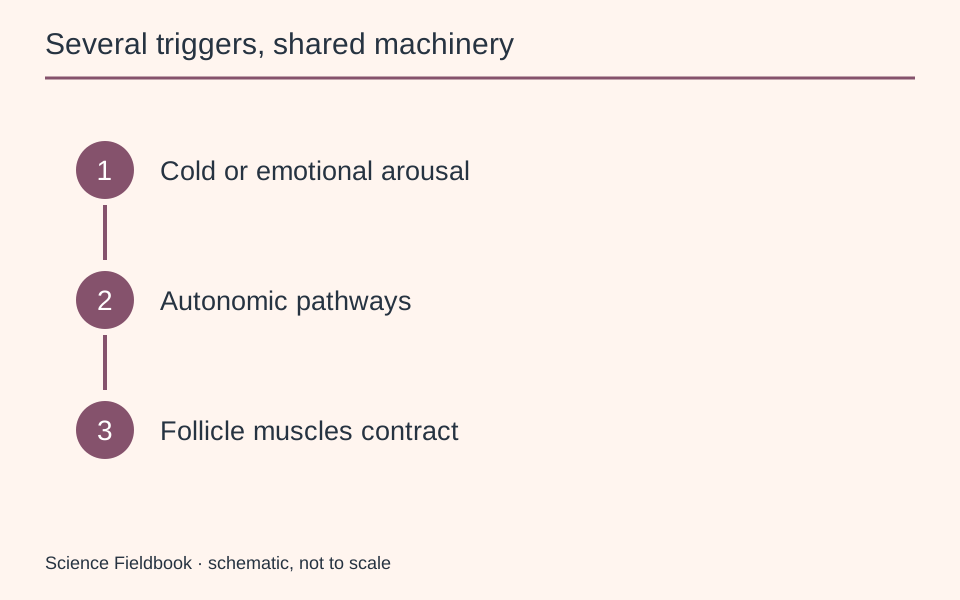
Goosebumps appear when tiny muscles attached to hair follicles contract, pulling hairs more upright and raising the skin around them. The response is called piloerection and is controlled through sympathetic nervous-system activity. Cold and certain emotional experiences can both trigger the same visible change.
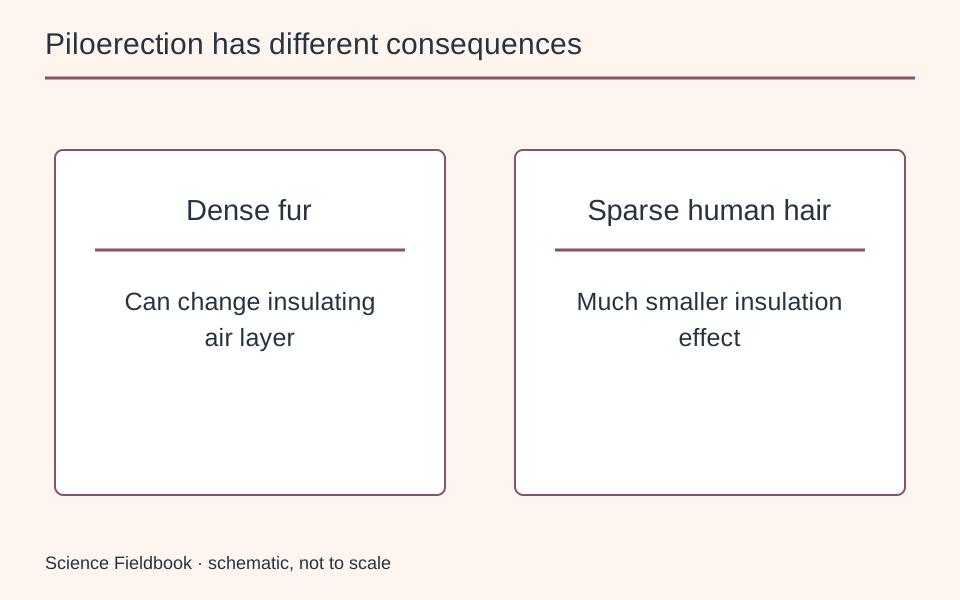
For a furry mammal, raising the coat can help trap an insulating layer of air or make the animal look larger. Humans retain the response despite having much less body hair, so the immediate mechanical effect is clearer than any large warming benefit on an ordinary human forearm.
The small muscle behind each bump
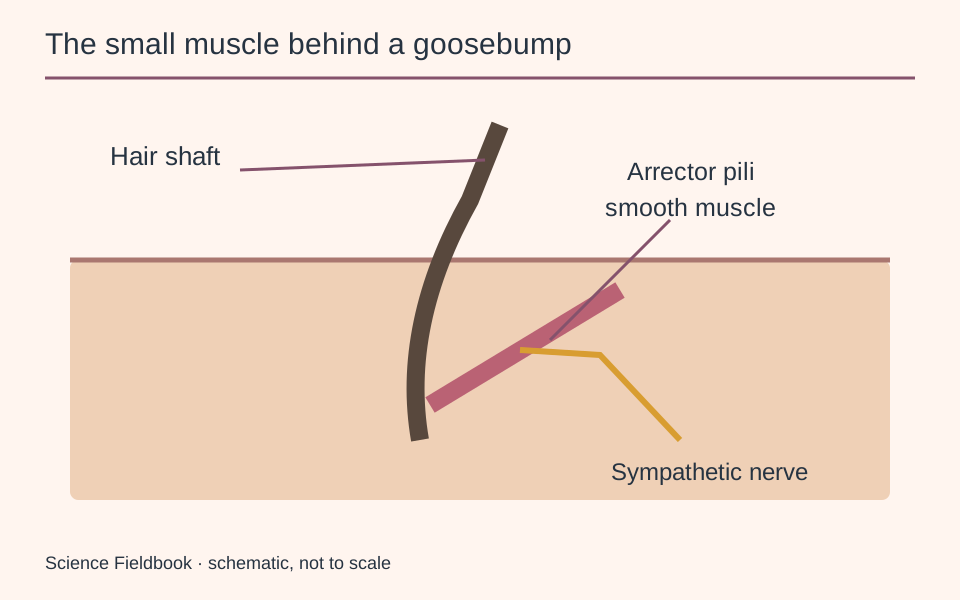
A hair follicle is the skin structure from which a hair grows. Associated with many follicles is a small band of smooth muscle called the arrector pili. When that muscle contracts, it changes the follicle's orientation and pulls on nearby tissue.
The hair becomes more erect and the skin surface develops a small bump. Nothing needs to crawl out of the skin, and the hair does not rapidly grow longer during the event. The visible change comes from movement of structures already present.
Because this is smooth muscle under autonomic control, most people do not create goosebumps by issuing the same kind of conscious command they use to bend an elbow. The regulation is more closely connected to automatic physiological responses.
How a cold signal becomes a skin response
Temperature-sensitive pathways provide information about the body and its surroundings. The nervous system can coordinate responses that conserve or generate heat, including changes in circulation and muscle activity. Piloerection can accompany that broader response to cold.
Sympathetic nerves help activate the small follicle muscles. “Sympathetic” here is a technical name for a branch of the autonomic nervous system, not a statement that the nerve is expressing an emotion or a personality trait.
The skin response occurs alongside other mechanisms described in body temperature regulation. Goosebumps and shivering are not the same event: one involves small hair-associated muscles, while the other involves activity in skeletal muscles that can produce substantial additional heat.
Why raising fur can help an animal stay warm
An insulating coat works partly by holding relatively still air near the skin. When hairs rise, the thickness and arrangement of that coat can change, reducing heat loss under suitable conditions. The exact benefit depends on the coat and environment.
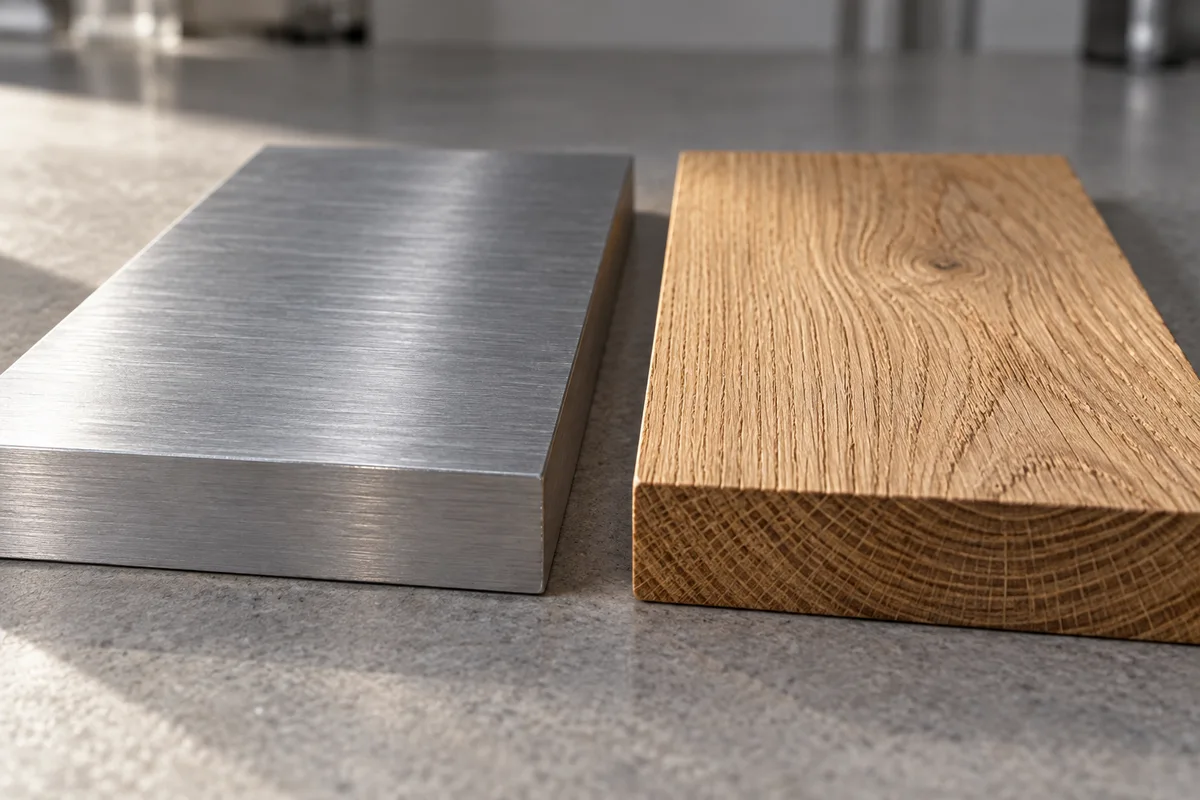
The underlying physics resembles other insulation problems. Trapped air generally transfers heat less readily than a direct conductive path through a dense solid, though moving air can carry heat away. A coat that traps air functions differently from a bare metal surface.
That is related to why wood and metal feel different at the same temperature. The key question is how readily energy moves through the material or boundary layer, not whether an object contains more “cold.”
Why the same effect is modest in humans
Human body hair is generally too sparse to create a thick adjustable insulating coat over most exposed skin. Raising it therefore does not provide the same protection as raising dense fur. Clothing and changes in circulation are much more consequential for human heat exchange.
That does not make the response imaginary or entirely disconnected from biology. Evolution can preserve pathways while changing the structures on which they act. A retained response can have a smaller visible or practical effect in a different body covering.
It is also unwise to tell a single neat evolutionary story as though it had been filmed. Comparing mammals helps explain plausible functional context, while the exact history and present roles of a response require additional evidence.
Why music, awe, or fear can cause goosebumps
Piloerection is not limited to temperature. Emotional arousal can engage autonomic pathways and produce goosebumps during music, suspense, awe, or other intense experiences. The resulting bumps use the same basic follicle machinery even when the trigger is different.
That does not mean a piece of music has made the skin cold, or that fear is literally turning into thermal energy. The nervous system can recruit a response in more than one situation. A shared output does not prove that all its triggers have the same purpose.
Related changes such as shivers or a feeling of chills can overlap with the experience, but the words describe different aspects. A subjective chill, a visible bump, and a measured change in temperature are not interchangeable observations.
What research on hair-follicle stem cells adds
Research has found that sympathetic nerves, arrector pili muscles, and hair-follicle stem cells form an interacting system. In a mouse study published in Cell, the nerve and muscle relationship helped regulate stem-cell activity associated with hair growth.
That work suggests that the machinery involved in short-term piloerection can also connect to longer-term tissue regulation in the studied animals. It broadens the biological picture beyond “a bump that raises hair.”
However, a result from mice does not establish that deliberately getting goosebumps will improve human hair growth. That would require different evidence. The study is an example of connected cell types and regulation, not a treatment recommendation or a personal hair-growth experiment.
Why a close-up image needs a clear caption
Magnification can make ordinary follicles and bumps look unfamiliar. Lighting and skin texture can also affect how obvious piloerection appears. A close-up alone does not show the nervous signal or measure the muscle force beneath the surface.
The anatomical diagrams on this page simplify the arrangement to identify the follicle, muscle, and nerve. They are not histology images and do not show every structure at its true relative size. The generated skin illustration is likewise not a clinical photograph of a particular person.
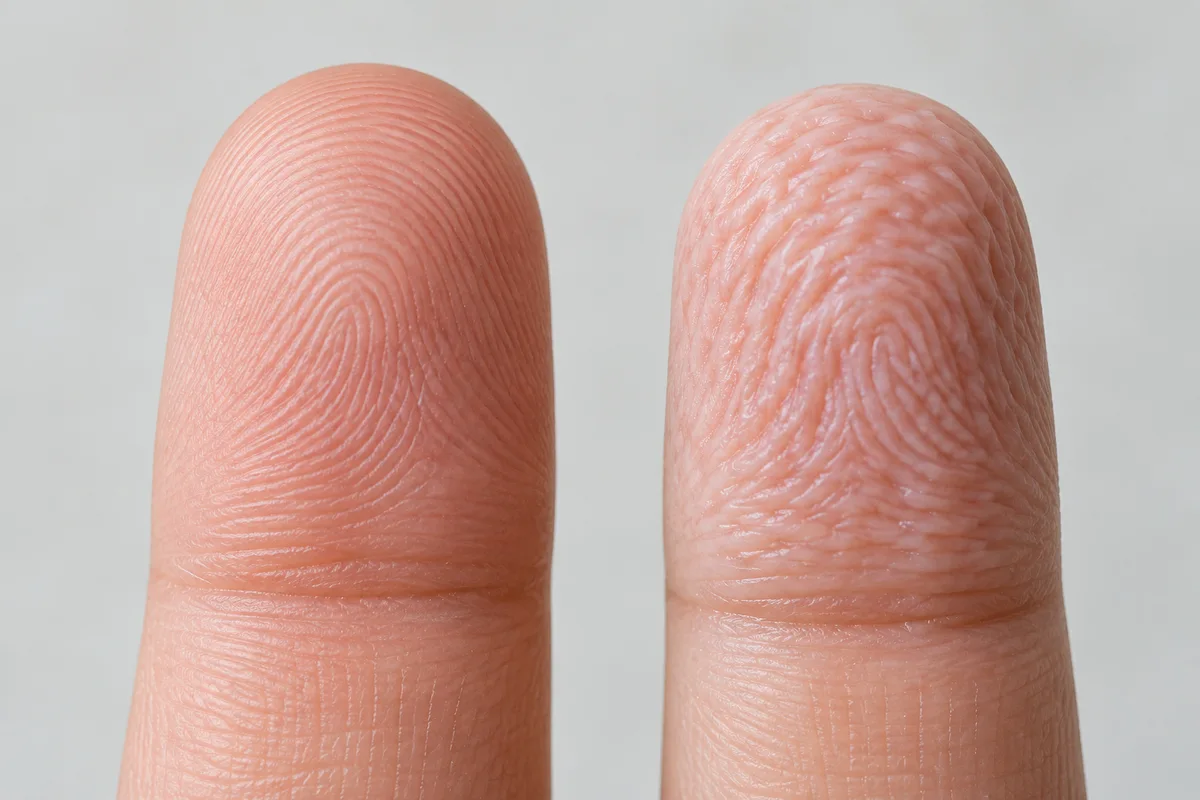
This distinction matters across physiology. Wrinkling after water immersion is another visible skin response with nervous-system involvement, but the key mechanics involve blood vessels and tissue volume rather than erecting hairs.
Questions the bumps alone cannot answer
Goosebumps do not identify a unique emotional state. A person might be cold, moved by music, startled, or responding to another influence. The appearance cannot reliably reveal what someone is thinking.
Nor is the presence or absence of visible bumps a general measure of health. Hair density, lighting, skin characteristics, and the stimulus all affect what an observer sees. This article explains a normal mechanism and does not diagnose unusual skin changes.
Automatic does not mean uncontrolled
An autonomic response is controlled through physiological pathways even when it does not require conscious intention. The size and duration of the response can vary with the stimulus and context. Calling goosebumps automatic therefore distinguishes the kind of control rather than describing a switch that always produces identical bumps. The same principle helps make sense of other visible changes in skin blood flow and sweating.
The takeaway
Goosebumps are produced by small smooth muscles that pull hair follicles upright under autonomic control. The response makes sense in the context of fur and can also be recruited by emotional arousal. Its visible simplicity hides a coordinated relationship among skin, muscles, nerves, and—in some research settings—hair-follicle regulation.